
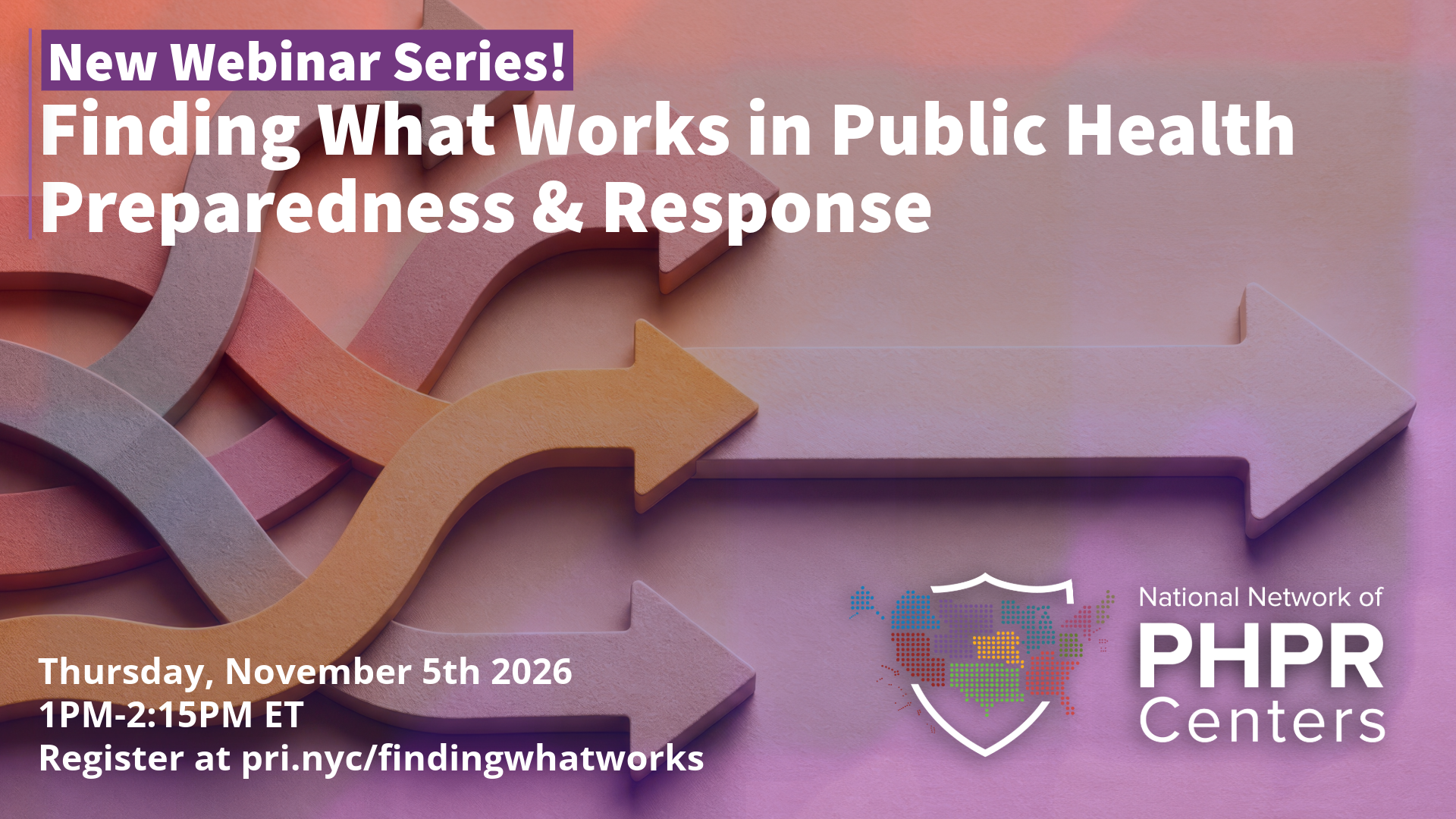
How do we make public health emergency preparedness and response more efficient and effective?
Finding What Works In PHPR is a webinar series focused on promising and evidence-based approaches to some of the most pressing challenges in public health preparedness and response (PHPR). Presented by National Network of PHPR Centers, in collaboration with NACCHO and ASTHO, each webinar explores what’s working, what we’re learning, and how those lessons can be applied in different communities and contexts.
Join us on Thursday, November 5, from 1:00–2:15 PM ET for an introduction to the work underway across the Network. Public health practitioners, emergency preparedness and response professionals, community partners, researchers, policymakers, and students are invited to learn about:
- Promising and evidence-based practices emerging from across the ten Regional Centers.
- Approaches to challenges including risk communication, workforce development, crisis leadership, and community emergency response.
- What the Centers are learning about what works, for whom, and in what contexts.
- Opportunities to apply and adapt these approaches to PHPR practice in communities across the country.
Attendees will also help shape the 2027 PHPR in Practice series by identifying the topics and challenges they most want to explore. Future webinars will bring together Regional Centers and their community partners for deeper dives into those priorities.
The National Network of PHPR Centers was established in 2024, when CDC’s Office of Readiness and Response funded ten Regional Centers for Public Health Preparedness and Response at academic public health institutions in each of the ten U.S. HHS regions. Since their launch, the Regional Centers have worked alongside communities and practitioners to identify promising practices, evaluate what works, and help scale proven approaches for challenges in risk communication, workforce development, crisis leadership, and community emergency response.