
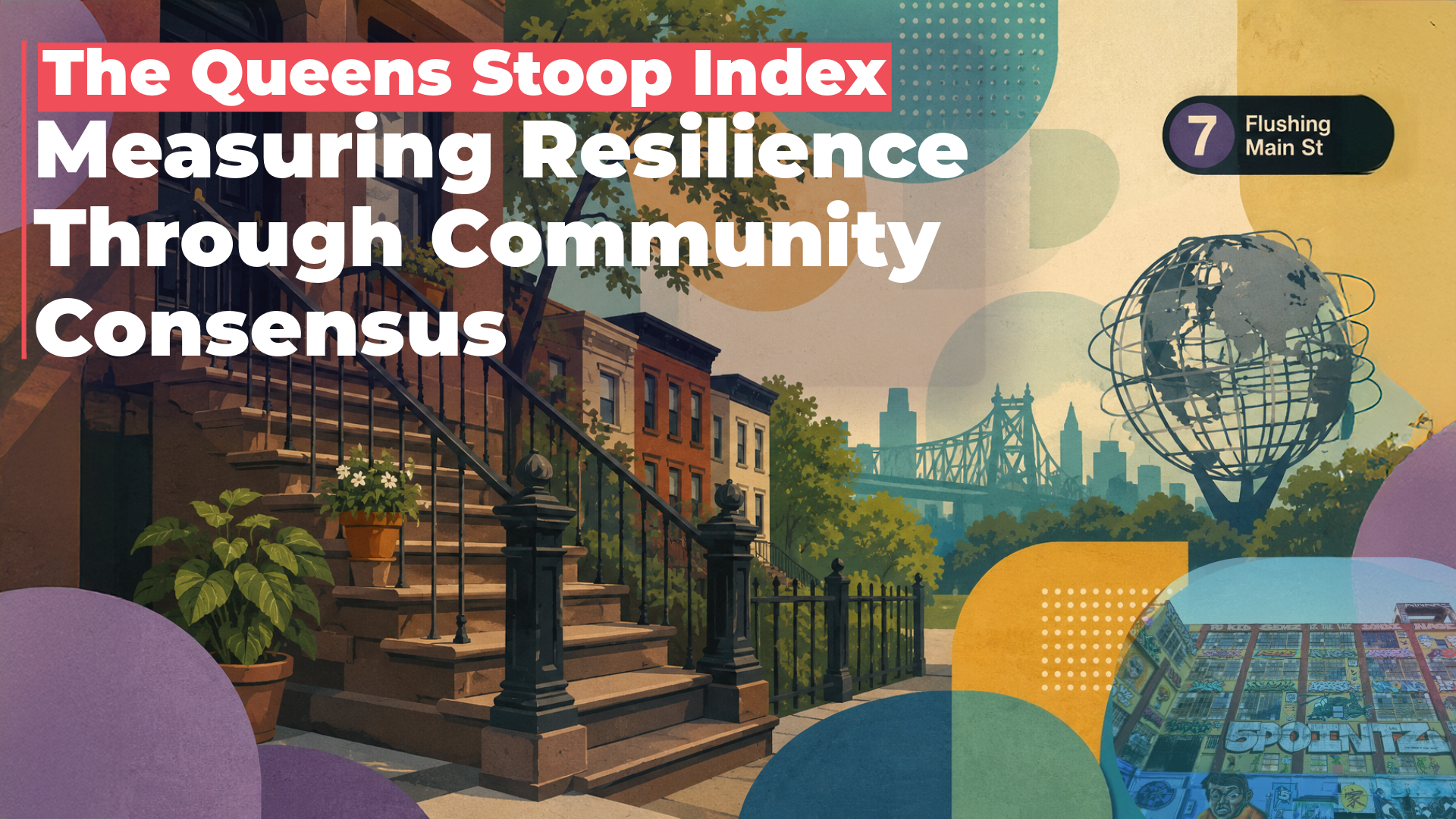
Queens residents know their neighborhoods best. The Queens Resilience Network, convened by the NYC Preparedness & Recovery Institute (PRI), is asking people who live, work, learn, and spend time in Queens to help shape how resilience is understood and measured across the borough.
The Queens Resilience Network was created to strengthen community connections and resilience across Queens, with a focus on long-term preparedness for public health emergencies and climate-related disasters. Queens faces some of the city’s highest climate and public health risks, along with deep social and economic inequities. The Network brings together trusted local organizations, community leaders, and partners to improve coordination, support local priorities, and help communities prepare before the next crisis.
This survey will inform the Queens Stoop Index, a tool being developed to measure neighborhood strengths, gaps, and priorities. Resilience includes the many resources a neighborhood relies on before, during, and after emergencies, including housing, local businesses, climate safety, community spaces, access to services, and relationships with government. Because every neighborhood experiences these strengths and challenges differently, your input is essential.
The Queens Stoop Index measures resilience across Queens neighborhoods. Like neighbors talking on a stoop, it brings together the opinions, values, and lived experiences of people across Queens to identify shared priorities for what makes a neighborhood prepared, safe, and strong.
Instead of assuming that every part of resilience matters equally in every place, the survey asks you to weigh in on what matters most. Your responses will help determine how different parts of resilience should be prioritized in the Index, so the final tool reflects both data and local experience.
The results will be shared publicly and support maps, reports, and planning tools that help guide practical, equitable, and evidence-based preparedness and mitigation investments. By taking a few minutes to complete the survey, you are helping PRI and the Queens Resilience Network build a community-informed picture of resilience in Queens and strengthen the borough’s ability to act before, during, and after emergencies.
Please take the survey by October 31st. Email resiliencenetworks@pri.nyc if you have any questions.